
On August 8, 2025, under the chairmanship of U.S. President Donald Trump, a peace framework was established between Armenia and Azerbaijan at the White House. The key points of this historic agreement are as follows:
- The agreement brings the Nagorno-Karabakh conflict closer to a final resolution.
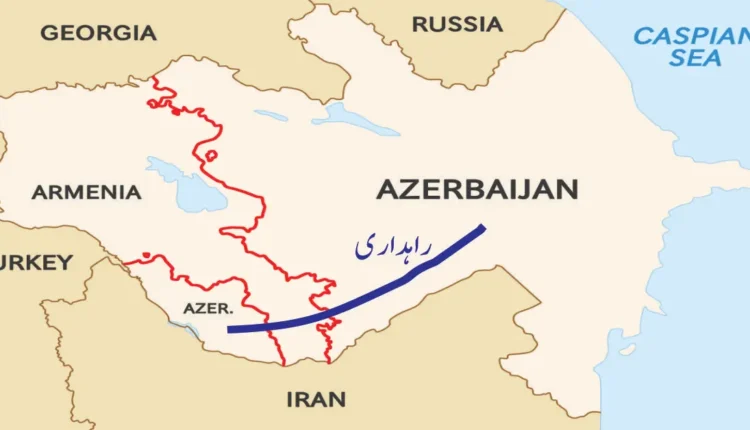
- According to the agreement, a major transit corridor will be constructed, starting from Azerbaijan’s mainland, passing through Armenia’s southern province of Syunik, and reaching Azerbaijan’s geographically separated province of Nakhchivan.
- This corridor will provide Azerbaijan’s mainland with direct land access to Turkey, as Nakhchivan shares a border with Turkey.
The media is referring to this corridor as the “Trump Route” or “TRIPP” (Trump Route for International Peace and Prosperity). This is the same area previously called the Zangezur Corridor.
Additionally, the agreement stipulates the dissolution of the OSCE Minsk Group, which had long been mediating negotiations on the Karabakh conflict.
Under the new peace framework:
- The United States will have special developmental rights in the Zangezur Corridor in the South Caucasus.
- U.S. forces will play a role in maintaining peace in the region.
This development is surprising not only for Russia but also for Iran and Turkey, all of which have economic and political interests in the region.
Potential Benefits of the Transit Corridor (TRIPP)
(a) Economic and Trade Benefits
- The corridor will become part of the Eurasian Transport Network, enabling faster and cheaper goods transport.
- It will be a key part of the Middle Corridor, connecting China and Central Asian countries to Turkey via Azerbaijan.
- It will establish uninterrupted land connections between Turkey, Armenia, Azerbaijan, and Central Asian countries.
- Armenia will also benefit, gaining a new land trade route in addition to routes through Georgia and Iran. The Turkey–Armenia border has been closed for over 30 years (since 1993, in support of Azerbaijan).
- Iran and Russia will also gain new trade opportunities through this corridor.
(b) Geopolitical and Political Benefits
- Azerbaijan’s mainland will no longer need to rely on routes through Iran to reach Nakhchivan.
- Turkey will gain direct land access to the Caucasus, strengthening its Turkic World Connectivity Plan.
- The U.S. will increase its influence in the region as a mediator and overseer, particularly in competition with Russia.
(c) Peace and Stability
- The corridor is designated only for civilian and commercial purposes, not military activities.
- Its security will be managed by an international or joint authority to prevent any party from militarily occupying it again.
Which Powers See This Agreement as a Threat?
- For Vladimir Putin, this agreement is a setback because U.S. forces will now maintain peace in the region.
- The U.S. will increase its influence in the South Caucasus, while Central Asian countries may shift their attention from Russia toward China, Turkey, and other allies.
- U.S. involvement in the Zangezur Corridor could affect Russia’s and Iran’s north–south trade routes.
- Armenia and Azerbaijan’s move toward peace under Trump’s mediation signals that neighboring countries are now cautious post-Ukraine war and do not consider Moscow a reliable partner.
Introduction to Mainland Azerbaijan
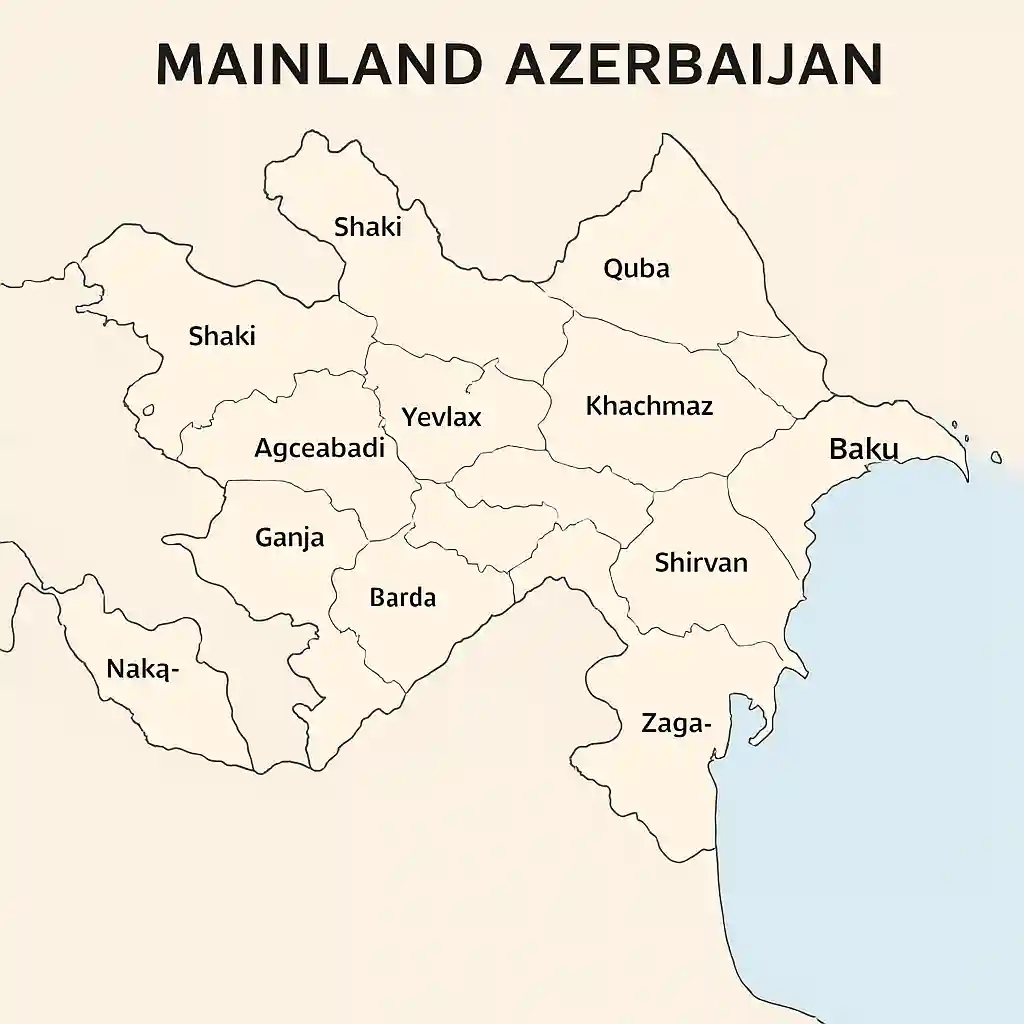
Mainland Azerbaijan refers to the central territory of Azerbaijan, part of its main geographic area.
- Located mostly in the Eastern Caucasus, stretching to the western coast of the Caspian Sea.
- Key provinces and areas include: Baku (capital), Ganja, Shirvan, Lankaran, Qabala, Shaki, Sumqayit, etc.
- The geographically separated region of Nakhchivan Autonomous Republic is not part of Mainland Azerbaijan because it is separated by Armenia.
Introduction to the South Caucasus
The South Caucasus is a geographical and cultural region at the crossroads of Eastern Europe and Western Asia, sometimes called Transcaucasia.
- Located south of the Caucasus Mountains, it consists of:
- Georgia
- Armenia
- Azerbaijan
- North: Caucasus Mountains separate it from Russia
- South: Borders with Turkey and Iran
- East: Caspian Sea, West: Black Sea
Key Features of the South Caucasus
Historical Significance:
- Used for trade, military, and cultural routes since ancient times, particularly as part of the Silk Road.
Ethnic and Linguistic Diversity:
- Home to multiple languages and ethnic groups, including Armenians, Azeris, Georgians, and various Caucasian tribes.
Religious Diversity:
- Armenia: Majority Christian (Armenian Apostolic Church)
- Azerbaijan: Majority Muslim (mainly Shia)
- Georgia: Majority Eastern Orthodox Christian
Economic Importance:
- Known for oil, gas, mineral resources, and agricultural production. Azerbaijan is especially prominent in the energy sector.
Political Significance:
- Strategically located at the intersection of Russia, Turkey, Iran, and the European Union’s interests.
- The region has frequent border disputes and ethnic tensions, the most notable being the Nagorno-Karabakh conflict, which persisted for decades between Armenia and Azerbaijan.