
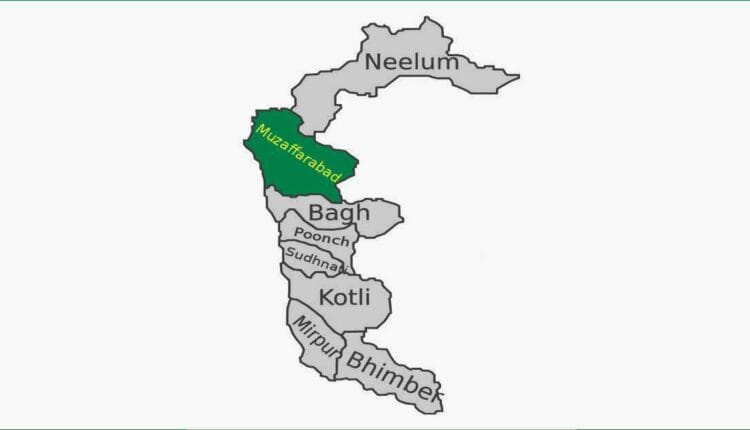
MUZAFFARABAD – As the administrative heartbeat of Azad Jammu and Kashmir (AJK) continues to evolve, the region remains structured into a precise hierarchy designed for local governance and public service delivery. Currently, the territory is organized into three primary divisions, which are further subdivided into 10 districts.
The Administrative Breakdown
The AJK government utilizes these divisions to manage the diverse geography of the region, ranging from the alpine heights of the Neelum Valley to the industrial hubs of Mirpur.
| Division | Number of Districts | Districts Included |
| Muzaffarabad | 3 | Muzaffarabad (Capital), Hattian Bala, Neelum |
| Poonch | 4 | Poonch (Rawalakot), Bagh, Sudhnoti, Haveli |
| Mirpur | 3 | Mirpur, Bhimber, Kotli |
These units are not merely lines on a map; they represent the jurisdictional boundaries for law enforcement, revenue collection, and developmental projects under the authority of the AJK Legislative Assembly.
The Broader Picture: A Region Divided
While AJK serves as a self-governing entity under Pakistan’s administrative umbrella, it is part of the larger, historically contested Kashmir region. The territorial control of Kashmir remains split between three neighboring nuclear powers:
India (Approx. 55%): Manages the Kashmir Valley, Jammu, and the Union Territory of Ladakh.
Pakistan (Approx. 35%): Administers Azad Jammu and Kashmir (AJK) and Gilgit-Baltistan.
China (Approx. 10%): Controls Aksai Chin and the Shaksgam Valley (the latter via a 1963 agreement with Pakistan).
Despite these administrative classifications, the official boundaries remain a subject of international diplomatic discussion and local significance.
Frequently Asked Questions
What is the capital of AJK?
Muzaffarabad serves as the capital city and the center of political activity for the region.
How does the governance of these districts differ from Pakistani provinces?
Unlike the four provinces of Pakistan (Punjab, Sindh, KPK, and Balochistan), AJK operates as a self-governing territory with its own President, Prime Minister, and Supreme Court, though it maintains a close constitutional relationship with Pakistan.
Why was the Shaksgam Valley ceded to China?
The Shaksgam Valley was handed over to China by Pakistan under the 1963 Sino-Pakistan Boundary Agreement to settle border disputes, though this move is not recognized by India.