
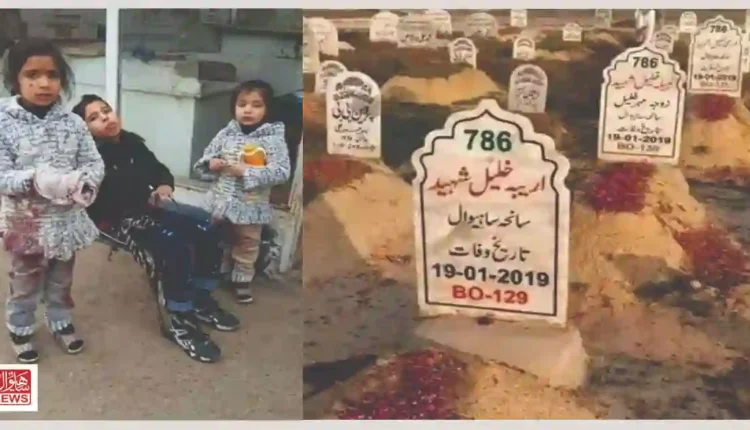
SAHIWAL – Today marks the seventh anniversary of the harrowing Sahiwal tragedy incident, a day that continues to haunt the collective conscience of the nation.
On January 19, 2019, what began as a routine family trip turned into a nightmare on the Grand Trunk Road, leaving a trail of grief, unanswered questions, and a persistent cry for justice.
The Fatal Afternoon
On that fateful Saturday in 2019, Mohammad Khalil, his wife Nabila, their three children, and a neighbor, Zeeshan Javed, were traveling from Lahore to Burewala to attend a wedding.
As their car reached the vicinity of Qadirabad near Sahiwal, personnel from the Counter-Terrorism Department (CTD) intercepted the vehicle and opened fire.
The brutal operation resulted in the immediate deaths of:
Mohammad Khalil (Head of the family)
Nabila (Khalil’s wife)
Areeba (Their 13-year-old daughter)
Zeeshan Javed (The driver)
Miraculously, Khalil’s three young children—Umair, Muniba, and Hadiba—survived the hail of bullets but were left to witness the cold-blooded killing of their parents and sister.
Contradictory Claims and Public Outcry
In the immediate aftermath, the CTD claimed the operation was intelligence-based, alleging that those inside the car were linked to a banned terrorist organization.
However, these claims were swiftly debunked by eyewitness accounts and mobile footage recorded by bystanders, which showed the victims were unarmed and offered no resistance.
The shooting incident sparked nationwide protests, leading the government to form a Joint Investigation Team (JIT). The case became a symbol of police brutality and the lack of accountability within law enforcement agencies.
After the sad incident the then Prime Minister Imran Khan took notice and asked CM to visit the spot. Punjab Chief Minister Usman Buzdar arrived in Sahiwal and ordered the arrest of CTD personnel involved in suspicious encounter.
Seven Years On: The Quest for Justice
Despite the global and national outrage, the legal journey for the survivors has been fraught with disappointment. In October 2019, an anti-terrorism court acquitted all six CTD officials involved in Sahiwal shooting, citing a “benefit of doubt” due to witnesses retracting their statements.
Seven years later, as the survivors of Saniha Sahiwal grow up without their parents, the Sahiwal tragedy stands as a grim reminder of the urgent need for police reforms in Pakistan.
For the family of Khalil and Zeeshan, January 19th is not just a date on the calendar, but a recurring memory of a day when the state, tasked with protecting them, became their executioner.
Expanded Powers, Diminishing Oversight
Recent legislative shifts, including controversial amendments to the Anti-Terrorism Act (ATA) and PECA laws, have granted law enforcement unprecedented powers, such as the authority to detain individuals for up to 90 days on mere suspicion and increased control over digital expression.
Human rights advocates warn that these expanded mandates, coupled with a lack of institutional oversight, heighten the risk of misuse and further endanger the fundamental rights of citizens.
As the nation remembers the victims of 2019 killings, the push for systemic police reform continues to clash with a legal landscape that increasingly prioritizes state authority over individual liberties.