
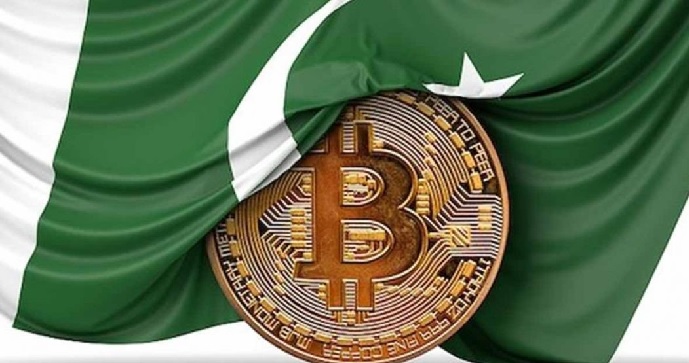
Pakistan has recently signed a memorandum of understanding (MoU) with the world’s largest cryptocurrency platform, Binance, to work on the tokenisation and blockchain-based distribution of up to $2 billion worth of government financial assets.
The MoU was signed by Pakistan’s Finance Minister Muhammad Aurangzeb and Binance’s Chief Executive Officer, a move the government has described as a significant development.
Speaking on the occasion, the finance minister said the agreement marks an important step in Pakistan’s journey towards economic reforms. He added that after signing the MoU, the next phase would be its implementation, and the government is keen to move forward swiftly on the project.
Following the establishment of the Crypto Council and the Virtual Asset Regulatory Authority in Pakistan, this MoU between the government and Binance is being seen as a major milestone in the digital assets sector.
What does tokenisation of government financial assets mean?
Government financial assets primarily include bonds issued by the state to raise funds from domestic and international financial markets. Similarly, within Pakistan, the government borrows from commercial banks through Treasury Bills (T-bills) issued by the State Bank of Pakistan.
Tokenisation refers to converting a real-world asset into a digital token that exists on a blockchain or digital system.
Under this new framework, a government bond that is traditionally issued will be converted into a digital token. These tokens can then be bought and sold through digital platforms.
Large assets can be divided into smaller tokens and offered for sale, a process enabled by blockchain technology.
Blockchain technology functions as an operating software system that allows tokens to be transferred from one entity to another while assigning each token a specific value.
Traditional financial transactions typically involve multiple intermediaries, making them costly and time-consuming. Globally, the estimated cost of financial transactions runs into $3 trillion.
In contrast, transactions involving tokenised digital assets on blockchain platforms can be completed within seconds, with significantly lower costs—estimated at only a few hundred million dollars.
Each digital token created on a blockchain has a unique identity, which forms the basis of secure and transparent transactions.
Why is the Pakistan–Binance MoU important?
Experts believe the MoU represents a major breakthrough for Pakistan’s digital asset ecosystem. If it leads to a formal agreement, it could provide a regulated environment for individuals and firms operating in the digital assets sector.
Such a framework could help attract foreign investment while enabling local investors to access global financial and capital markets more easily.
A large number of Pakistanis are already active on cryptocurrency exchanges, although Binance does not currently share detailed user data. If a formal agreement is reached, Binance is expected to provide this data, bringing users under a regulated framework and enhancing consumer protection.
A regulated system would also make it easier to attract overseas investment into Pakistani projects. By tokenising the required investment amounts, funds could flow more efficiently—much like an initial public offering (IPO) in stock markets, where shares are offered to the public.
Institutionalisation of the sector would improve ease of doing business, expand investment opportunities, and provide local investors with access to global markets.
Concerns over dollar outflows
Addressing concerns that increased overseas investment could lead to dollar outflows, the government has said the initiative will not impact Pakistan’s foreign exchange reserves.
Officials explained that when Binance operates in Pakistan, payments related to tokenisation will be made in local currency, not in dollars. The government has rejected fears of capital flight, stating that the system does not facilitate such outflows.
Social media reaction and Asad Umar’s questions
The MoU has sparked debate on social media. While some users have welcomed the development, others have raised concerns.
Former finance minister and PTI leader Asad Umar questioned the move in a post on X, asking what route had been adopted for the tokenisation of $2 billion in assets and whether the process would be transparent.
He argued that Binance is not a globally recognised institution for asset tokenisation and questioned why established global financial giants such as BlackRock, UBS, Goldman Sachs, JP Morgan, and HSBC were not involved.
Responding to these concerns, Finance Minister’s Adviser Khurram Shehzad clarified that the MoU essentially serves as a no-objection certificate (NOC), acknowledging that Pakistan has a digital asset regulatory authority and outlining how regulatory requirements must be followed.
He said Binance’s compliance would be assessed, and only if it fully adheres to the regulatory framework would further progress be made.
“No licence has been issued to Binance; only an NOC in the form of an MoU has been granted,” he explained, adding that Binance remains the world’s leading blockchain exchange.
According to Shehzad, many Pakistanis are already using Binance platforms, and the government’s goal is to create an ecosystem that offers them a regulated, secure environment for digital asset activities.
Also Read:
Technology Exhibition Held at Divisional Public School Sahiwal